
The Difference Between Intuition And Anxiety
SPIRITUAL / INTUITIVE
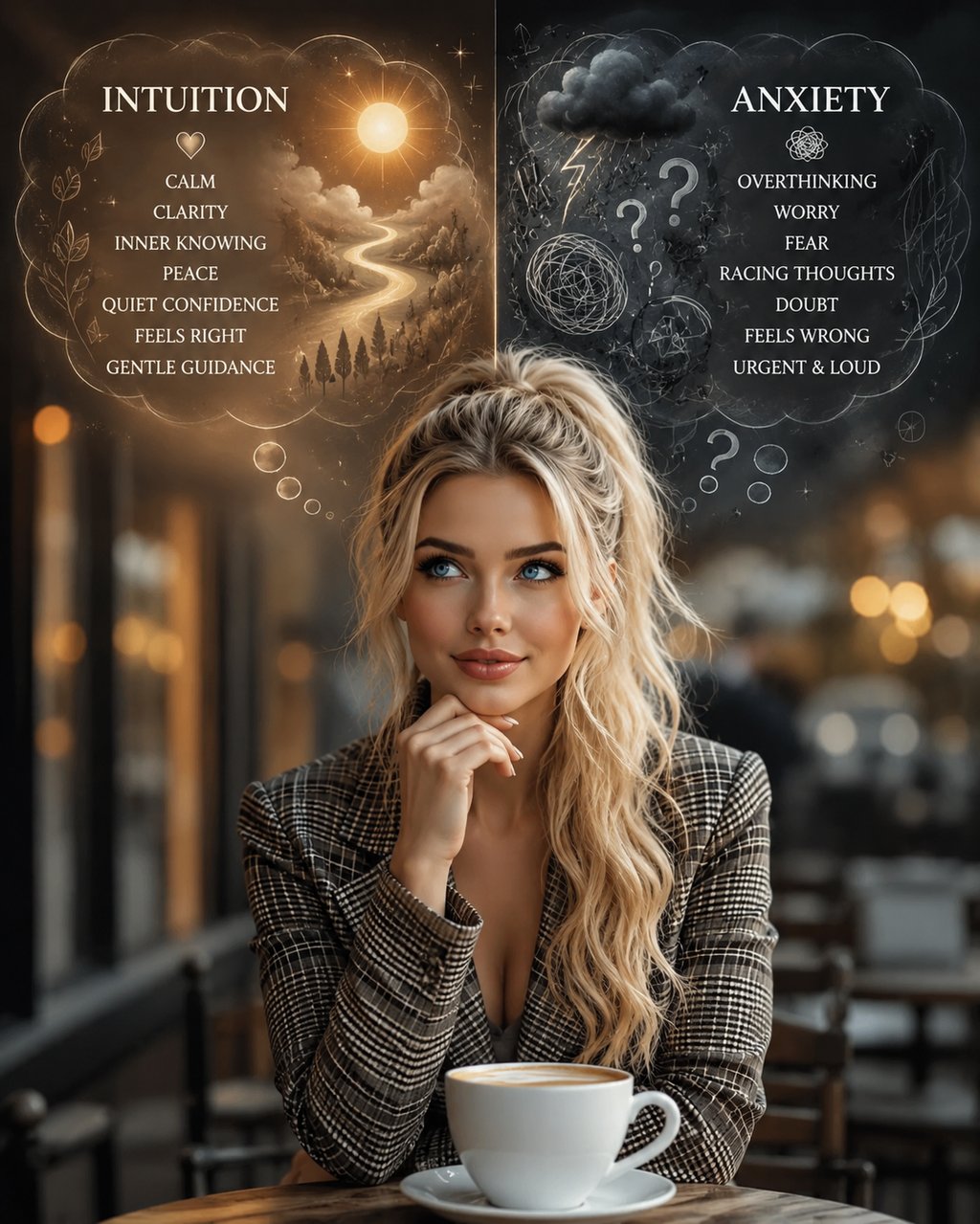
Many people struggle to tell the difference between intuition and anxiety.
Both can feel emotionally intense. Both can create strong internal reactions. Both can influence decisions, relationships, and the way people respond to situations around them.
This is one reason the two are often confused.
Someone may wonder:
“Is this a genuine gut feeling?”
“Am I sensing something is wrong?”
“Or am I simply anxious and overthinking?”
Learning the difference can take time, self-awareness, and emotional honesty.
Intuition is often described as a calm inner knowing.
It tends to feel quiet, steady, and clear, even when the message itself is uncomfortable. Intuition usually does not scream for attention or create spiralling panic. Instead, it often arrives as a subtle sense that something feels aligned, misaligned, safe, unsafe, right, or worth paying attention to.
Many people describe intuition as:
calm clarity
quiet awareness
a grounded inner feeling
a subtle “knowing”
gentle but persistent guidance
Intuition tends to create awareness without overwhelming the nervous system completely.
Anxiety feels different.
Anxiety is often driven by fear, uncertainty, past experiences, emotional overwhelm, or the nervous system trying to protect itself from potential danger or discomfort. It can create racing thoughts, over-analysis, catastrophising, physical tension, hyper-vigilance, and difficulty feeling settled mentally or emotionally.
Where intuition often feels quiet and grounded, anxiety tends to feel urgent and repetitive.
An anxious mind usually searches for certainty.
It replays conversations repeatedly, imagines worst-case scenarios, seeks reassurance constantly, and struggles to fully relax. Anxiety often pulls people into fear-based thinking about what might happen rather than creating calm awareness about what is actually happening in the present moment.
One of the biggest differences between intuition and anxiety is often the way the body responds.
Intuition may feel emotionally strong, but it is usually accompanied by a deeper sense of steadiness underneath it. Even difficult intuitive feelings often arrive without panic.
Anxiety, however, tends to activate the nervous system more intensely.
People may experience:
racing thoughts
chest tightness
emotional spiralling
restlessness
difficulty sleeping
overthinking
obsessive thinking
physical tension
heightened fear responses
This is why nervous system awareness becomes so important when learning to trust intuition.
For many people, especially those who have experienced trauma, emotional instability, chronic stress, or difficult relationships, the nervous system can remain in a heightened state of alert for long periods of time. In these situations, fear responses can sometimes feel similar to intuitive warning signs because the body has learned to constantly scan for danger.
This can make self-trust feel confusing.
Sometimes what feels like intuition is actually anxiety searching for control, safety, or certainty.
At the same time, intuition and anxiety are not always completely separate. Anxiety can sometimes block intuition by creating mental noise and emotional overwhelm. When the mind becomes flooded with fear, it can become harder to hear quieter internal guidance clearly.
This is one reason grounding practices, emotional regulation, rest, and self-awareness are so important.
The calmer and safer the nervous system feels, the easier it often becomes to recognise the difference between fear-based thinking and genuine inner knowing.
Intuition also tends to remain consistent over time.
An anxious thought may rapidly change, escalate, or contradict itself repeatedly throughout the day. Intuition is often steadier. Even if ignored temporarily, it usually continues returning calmly rather than aggressively demanding attention through panic.
One of the most important things to understand is that learning the difference between intuition and anxiety is a process.
It is not something most people master instantly.
Developing self-trust often involves slowing down, observing emotional patterns, becoming more aware of nervous system responses, and learning how your body reacts to both fear and inner clarity over time.
And sometimes, the greatest form of intuition is not dramatic prediction or perfect certainty.
Sometimes it is simply learning to listen to yourself with greater honesty, awareness, and trust.
Em xx